.png)
Skyhawks 2026 Winter Season Recap ❄️

What Your Kids Were Learning (and Loving) This Winter
Another winter season is in the books, and what a season it was! Over the past several weeks, our Skyhawks coaches have been out at parks and rec centers across the area, working with kids of all ages and skill levels to build confidence, develop athletic fundamentals, and—most importantly—have a blast doing it.
We asked our coaching team to share their honest reflections from the season: what worked, what the kids loved, what made them proud, and yes, what challenges they faced along the way. The result is a window into what your kids have really been up to during class—and we think you’ll love what you see.
This winter, our coaches logged 54 session reports across programs at locations including Marlin Park, Burton Park, San Bruno Rec Center, and more. Here’s what we found.
The Winter Lineup
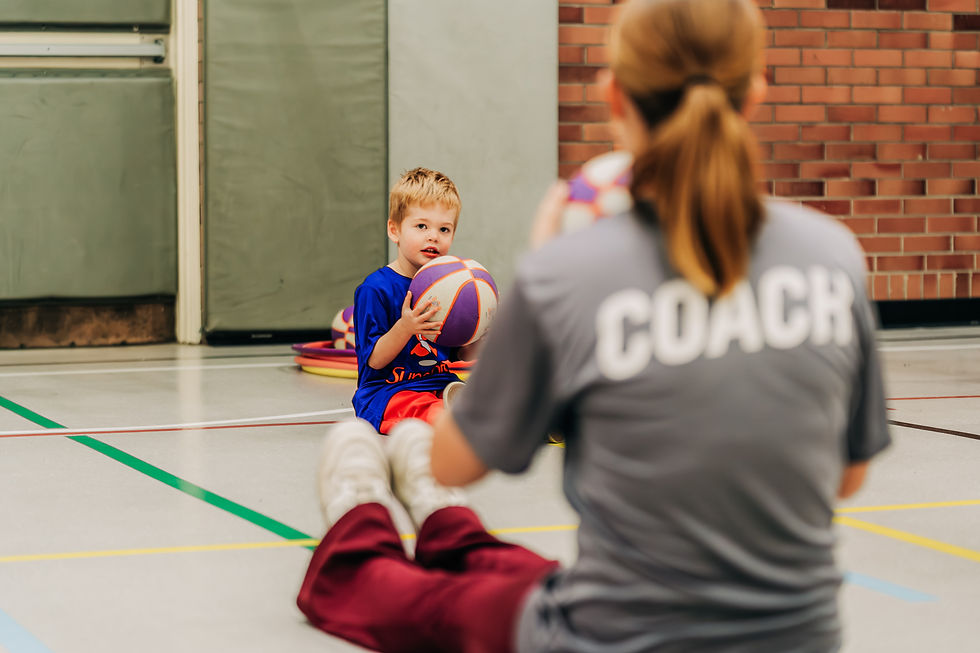
This season’s programming was all about variety. Our two biggest programs were HoopsterTots—our basketball classes designed for the littlest athletes ages 3 to 5—and Volleyball for older kids. Together, those two programs made up more than 75% of our winter sessions. We also ran Basketball for school-age kids, Pickleball, Flag Football, Volleyball Tots, and even a Multi-Sport class for kids who wanted to sample a little bit of everything.

Class sizes stayed small and personal, typically around 4 to 6 kids per session, which meant coaches could really get to know each child and tailor instruction to their level. Whether your little one was bouncing a basketball for the first time or your 10-year-old was learning to spike a volleyball, our coaches met them where they were.
More Than Just Sports: Life Skills on the Field
If you’ve ever asked your kid what they learned in class and gotten a shrug and a “we played games,” here’s the full picture. Every single Skyhawks session starts with a life skill conversation. Our coaches gather the kids in a circle and talk through a value—what it means, why it matters, and how they’re going to practice it that day. Then they weave it into every drill and game that follows.
This winter, the most popular life skill was teamwork, featured in about 26% of all sessions. Coaches led circle discussions about what teamwork looks like, then reinforced it through partner drills and team-based games. As one coach described it, they used passing games to teach kids that sharing the ball means relying on each other—and that’s what being a teammate is all about.
Perseverance and resilience showed up in 13% of sessions. One coach shared that they went off-script from the standard curriculum to teach perseverance because they felt it was something the kids needed to carry beyond the court. Coaches encouraged kids to keep trying even when drills got tough, celebrating effort over outcome.
Respect and inclusion each appeared in about 11% of sessions. Coaches asked kids to come up with their own examples of how to show respect—like treating equipment carefully, listening when a teammate is talking, and saying encouraging things during games. For inclusion, coaches made a point of hearing kids out, asking them to pair up with someone new, and creating space for every child to feel welcome.
Sportsmanship and leadership rounded out the season’s life skill lineup. One session stood out in particular: a coach reported that after weeks of working on sportsmanship, there was finally a session with no taunting, no bragging, and kids genuinely working together. That’s the kind of progress that doesn’t always show up in a score, but it’s the progress that matters most.
The Games Kids Can’t Stop Talking About
If your child has come home raving about “Mr. Fox” or begging to play “Attack the Ship,” you’re not alone. Our coaches use creative, game-based drills to teach real athletic skills—and the kids absolutely love them.
The undisputed fan favorite this winter was “What Time Is It, Mr. Fox?” which showed up in 16 of our 54 sessions. It’s a dribble and tag game that develops counting and listening skills while keeping the energy sky-high. Right behind it were “Jellyfish Jostle” and “Fancy Fingers,” each appearing in 12 sessions—both are dribbling-focused games that help kids develop hand-eye coordination and comfort with the ball.
“Attack the Ship” was our top hoops game, featured in 11 sessions, where kids practice aim and power in a playful competitive format. “Sleeping Dinosaur” showed up in 9 sessions as another shooting favorite. On the passing and defense side, “Save the Village” appeared in 7 sessions, teaching kids how to work together to protect their zone.
Other crowd-pleasers included “Obstacle Course” for agility work, “Pac Man” for dribbling, and “Get Me Out of Jail” (aka “Jailbreak”) for shooting under pressure. One coach shared that when asked what their favorite part of class was, a group of kids shouted in unison: “ALL OF IT! 100 OF IT!”
The beauty of these games is that kids don’t even realize how much they’re learning. While they’re laughing and chasing and competing, they’re actually building dribbling technique, passing accuracy, defensive positioning, and shooting form. That’s the Skyhawks way—learning through play.
What Your Kids Were Actually Learning
Behind all the fun, there’s real skill development happening. Here’s a snapshot of the athletic skills coaches focused on this winter:
Dribbling was the most-taught skill, covered in 44% of all sessions. From “Fancy Fingers” warm-ups to full-court dribbling challenges, coaches built this foundational skill week after week.
Passing came in close behind at 41% of sessions. Coaches used partner drills, circle passing, and games like “Save the Village” to teach kids how to share the ball with accuracy and intention.
Shooting appeared in 35% of sessions, with coaches using creative games like “Attack the Ship” and “Sleeping Dinosaur” to make target practice feel like an adventure.
Hitting and spiking were the focus in 17% of sessions, mostly in our volleyball programs. Coaches worked on toss-and-catch progressions before building up to hitting over the net.
Serving, bumping, catching and throwing, and setting rounded out the skill work, with coaches tailoring each session to where their group was at developmentally.

Coaches also reported strong comprehension from the kids. Over 87% of sessions received a 4 or 5 out of 5 on sport skill understanding—meaning the vast majority of kids are walking away from class with real, tangible progress in their athletic development.
The Moments That Made Our Season
We asked every coach to share at least one “win” from each session—a moment where a kid did something that made the coach proud. The responses were, honestly, the best part of reading through all 54 reports. Here are some of the highlights:
One of the most common themes was shy kids coming out of their shells. Multiple coaches reported kids who started the season reluctant to participate and ended it fully engaged and smiling. One coach shared that a student who was afraid of everything—including the coach and teammates—didn’t participate in drills at first, but by the end of class, they were right in there with everyone else. Another coach helped a girl who struggled with confidence in hitting—she kept missing or hitting too softly, but by the end of the drill, she was sending the ball over the net consistently.
First-time achievements were everywhere. A coach reported that all of the girls in their volleyball class were able to underhand serve over the net by the end of a session. In basketball, one coach was thrilled to see a student finally understand how to use their legs when shooting—and then drain two baskets in a row. A young athlete named Adam showed steady improvement week after week, with his coach noting the progress each time.
The team moments were just as special. One coach described how, during their final session, all the kids had really great sets and serves that went over the net—exactly what the coach had been working toward all season. Another shared that seeing kids laugh and feel comfortable passing to one another was their biggest win. In one HoopsterTots session, a group of kids who’d been reluctant to pass finally started sharing the ball, and the coach lit up describing the shift.
And then there were the moments that were just pure joy. A birthday celebration mid-class where everyone sang together. A group of kids declaring that everything was their favorite part of class. A child who’d had a rough morning being gently encouraged back onto the court and ending the day with a smile. Parents helping from the sidelines, cheering their kids on through every drill. These are the moments that remind us why we do this.
What Kids and Parents Are Saying
We love hearing from families, and this winter delivered some great quotes. Here are a few of our favorites from the season:
“I LIKED EVERYTHING”
— Kai
“We want to play a million more games!”
— A group of kids when asked if they wanted to end class early
“I want to keep playing pickleball.”
— A student after their first pickleball session
“Thank you for all of your patience! Zayn had a really fun time!”
— Zayn’s dad
“Thank you so much for helping me with my basketball!”
— Oliver
“I’m having so much fun!”
— Preston
“Listen to Coach Star, she’s a great coach!”
— Amelia’s mom
“Thank you so much Coach Lila! You’re the reason he likes basketball.”
— Leon’s mom
“Teamwork makes the dream work!”
— Wyatt
Hearing these kinds of things from kids and parents is what fuels our coaches. It tells us that beyond the drills and games, we’re creating an environment where kids feel supported, challenged, and genuinely happy.
Keeping It Real: Coaching Isn’t Always Easy
We believe in being transparent with our families, so let’s talk about the other side of the coin. Coaching young athletes is incredibly rewarding, but it comes with its share of challenges—and we think being honest about that actually makes our programs better.
The biggest challenge our coaches faced this winter? Managing energy and behavior. About 35% of sessions mentioned some form of kids being distracted, talking over the coach, or needing extra redirection. And honestly, that’s completely normal. These are young kids with big energy, and sometimes that energy goes sideways. Our coaches handle it with patience, creativity, and a good sense of humor. One coach described how a student kept getting distracted by their Apple Watch—and even called their grandmother mid-class. You can’t make this stuff up.
Skill level differences showed up in about 17% of sessions. When you have a group with a mix of ages or experience levels, it can be tricky to keep the more advanced kids challenged while making sure beginners don’t feel overwhelmed. Our coaches got creative, adjusting games so everyone could contribute meaningfully and arranging activities to be as fair as possible.
Lateness and time management came up in about 13% of sessions. When students arrive late, it can throw off the flow of a class, especially when coaches have planned a life skill discussion at the start. Our coaches adapted on the fly, but it’s a good reminder for families that arriving on time helps everyone get the most out of each session.
A handful of coaches also noted that the curriculum binder only covers six weeks, so toward the end of longer sessions, they were improvising life skill lessons. One coach took that as an opportunity to teach perseverance—a skill they felt was important even though it wasn’t on the official list. That kind of initiative is exactly what we love to see from our coaching team.
And of course, there were the everyday realities: a windy day that kept blowing over the mini hoop, a set of lost cones, wet fields after rain, and the eternal challenge of getting 4-year-olds to listen during instructions. Our coaches took it all in stride. As one coach put it when asked about challenges: “Nothing. They were very little, so today we just worked on getting to know each other and having fun.” Sometimes, that’s exactly the right approach.
Looking Ahead to Spring
This winter season gave us so much to be proud of. Kids built real skills, formed friendships, learned values that go way beyond the court, and—above all—had fun. Our coaches poured their hearts into every session, and it shows in every kid win, every parent thank-you, and every shout of “can we play one more game?”
As we gear up for our spring season, we’re taking everything we learned this winter and building on it. More creative games, more life skill integration, and the same small-group, coach-led experience that makes Skyhawks special.
We can’t wait to see your kids back on the field. Stay tuned for our spring schedule, and as always—thank you for trusting us with your little athletes. We don’t take that lightly.


Comments